Food Grade Acrylic: Safe Choice for Your F&B Business

Informational

When it comes to materials used in the food industry, safety and durability are top priorities. One of the most trusted materials is food grade acrylic

This type of acrylic is specially manufactured to meet strict safety standards, making it suitable for direct contact with food and beverages.

What is Food Grade Acrylic?

Food grade acrylic is a high-quality plastic material that has been tested and certified to be safe for use with food. 

Unlike regular acrylic, it does not contain harmful substances that could contaminate food or drinks. It is also resistant to bacteria, easy to clean, and highly durable.

Read also: Benefits of Using Clear Cast Acrylic Sheet

Is Acrylic Safe for Food?

Yes, acrylic is safe for food as long as it is certified as food grade

Regular acrylic may not always meet safety standards, but food grade acrylic has been tested to ensure it does not leach harmful chemicals or contaminants. 

Always look for products with FDA or NSF certification to guarantee safety in food applications.

Benefits of Using Food Grade Acrylic

  1. Safe for Food Contact
    Certified food grade acrylic complies with international safety standards, ensuring it is non-toxic.
  2. Durable and Long-Lasting
    It is highly resistant to impact and does not easily crack, making it ideal for everyday use in the food industry.
  3. Crystal Clear Transparency
    Glass-like clarity, making food grade acrylic gives excellent visibility, perfect for displays, food containers, or protective covers.
  4. Lightweight and Easy to Handle
    Compared to glass, acrylic is much lighter, making it easier to transport, install, and maintain.

Read also: Do’s and Don’ts: Cleaning Acrylic Sheet the Right Way

Applications of Food Grade Acrylic

Food grade acrylic can be found in various food-related industries, including:

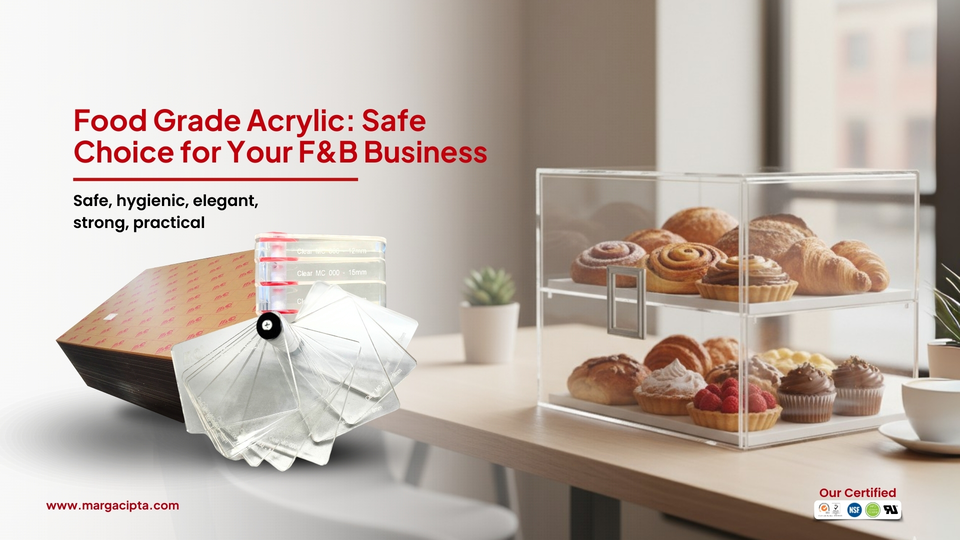
  • Food displays and covers in restaurants and bakeries
  • Storage containers for dry goods or liquids
  • Protective shields for hygienic food preparation areas
  • Tableware and serving trays for commercial or household use

Choosing food grade acrylic ensures safety, durability, and hygiene for any food-related application. 

Looking for high-quality food grade acrylic sheets? MC® Cast Acrylic Sheets are NSF-certified for clear and white opal variants, trusted for consistent quality and safe use in food contact applications.

Contact us on info@margacipta.com for more details.


News Release

MARGA CIPTA is announce the addition of Pantone's 2023

From the vibrant and bold, to the classic and traditional, color has the power to evoke an emotional response. MARGA CIPTA has been a leader in providing our customers with the highest quality cast acrylic sheet products. We are pleased to announce the addition of Pantone's 2023 Color of the Year, Viva Magenta 18-1750.

Viva Magenta will be perfect for a variety of applications, from color-coding locations and items to make the most of your space. We encourage you to explore all of our acrylic products.

Fabricators, designers, architects and retail clients expect consistency and quality and Marga Cipta's high optical quality acrylic product, great customer service and a responsive production team is your perfect supplier partner.

For more info contact us or your account rep for more details and current prices

Best Acrylic Sheet for Signage: Types, Thickness & Tips

The best acrylic sheet for signage depends on clarity, durability, thickness, and fabrication needs.

For most signage applications, clear or colored cast acrylic sheets are preferred because they offer excellent optical clarity, durability, and machining performance.

Acrylic signage is widely used because it provides a modern, glass-like appearance while being lighter and more durable.

Types of Acrylic Sheets for Signage

Different acrylic sheet types are designed for different applications.

Cast Acrylic

Cast acrylic is considered the premium choice for signage.

Advantages:

  • Superior optical clarity
  • Better chemical resistance
  • Excellent for laser cutting and engraving

Best for:

  • Premium signage
  • LED light panels
  • Decorative displays

Extruded Acrylic

Extruded acrylic is produced through a continuous manufacturing process.

It is usually more affordable, but for long-term projects or premium signage, extruded acrylic may require earlier replacement or maintenance compared to higher-grade acrylic materials.

Best for:

  • Budget signage
  • Simple display panels
  • Short-term or temporary installations

Read also: How to Identify High-Quality Cast Acrylic Sheets

Recommended Acrylic Thickness for Signage

The ideal thickness depends on the size and installation method.

Sign Type

Recommended Thickness

Small indoor signage

2–3 mm

Wall signage

3–5 mm

Outdoor signage

5–8 mm

Large signage panels

8–10 mm

Thicker acrylic provides better rigidity and durability for larger signs.

Why Acrylic Is Popular for Signage

Acrylic sheets are widely used in the signage industry because they offer several benefits.

High Clarity

Acrylic provides a glass-like finish that enhances the appearance of logos and graphics.

Easy Fabrication

Acrylic can be:

  • Laser cut
  • CNC engraved
  • UV printed
  • Heat bent

This makes it ideal for creative signage designs.

Lightweight and Durable

Compared to glass, acrylic is lighter and easier to install while still offering good durability.

Read also: Clear Acrylic Sheet vs Glass: Pros, Cons & Key Differences

Choosing a Reliable Acrylic Manufacturer

For consistent quality and precise dimensions, it is important to source acrylic sheets from a reliable manufacturer such as
PT. Margacipta Wirasentosa.

Quality acrylic sheets provide:

  • Stable thickness
  • High optical clarity
  • Reliable durability for signage applications.

FAQ: Acrylic Sheet for Signage

What type of acrylic is best for signage?

Cast acrylic is generally considered the best option for premium signage.

What thickness acrylic should be used for signage?

Most signage uses acrylic between 3 mm and 8 mm depending on size.

Can acrylic signs be used outdoors?

Yes, high-quality acrylic sheets are suitable for outdoor signage.

Is acrylic better than glass for signage?

Acrylic is usually preferred because it is lighter, safer, and easier to fabricate.

Choose the Right Acrylic Sheet for Your Signage Project

Using the right acrylic sheet can significantly improve the durability, appearance, and overall quality of your signage.

PT. Margacipta Wirasentosa offers a range of acrylic sheets designed for signage applications, including clear and colored panels with consistent thickness and excellent surface quality.

  • Ideal for LED signage and light boxes
  • Suitable for laser cutting and engraving
  • Available in multiple thickness options
  • Reliable clarity and durability for indoor and outdoor signage

Get in touch with our team at info@margacipta.com to find the best acrylic sheet solution for your signage needs.

Acrylic Usage Trends 2026: New Applications in Design and Industry

Acrylic continues to gain momentum as one of the most versatile materials across design, construction, and manufacturing industries. Known for being lightweight, strong, highly transparent, and easy to fabricate, acrylic is increasingly replacing traditional materials such as glass and metal.

As we move into 2026, acrylic is no longer limited to signage or displays. Its applications are expanding rapidly, opening new opportunities for businesses, designers, architects, and manufacturers. Below are the key acrylic usage trends predicted to shape design and industry in 2026.

Trend 1: Acrylic Interior Panels

One of the strongest acrylic usage trends in 2026 is the rise of acrylic interior panels for both commercial and residential buildings.

Why this trend is growing:

The rapid development of offices, retail spaces, hotels, and modern housing has increased demand for materials that are visually appealing, durable, and cost-efficient. Acrylic interior panels offer high clarity and a sleek, minimalistic look, making them ideal for partitions, wall panels, and decorative elements.

Compared to glass, acrylic is more affordable, lighter, and easier to install. Designers and architects also favor acrylic for its flexibility in color, thickness, and finish, allowing them to create modern interior concepts without compromising safety or aesthetics.

Read also: 100% Virgin MMA: The Key to High-Quality Acrylic Sheets

Trend 2: LED Signage and Display Systems

LED signage remains one of the most dominant acrylic applications heading into 2026.

Why this trend continues to rise:

Offline retail transformation is still strong, particularly in developing markets where physical stores continue to evolve. Many small and medium-sized businesses are renovating storefronts and upgrading visual branding, increasing demand for LED signage and display systems.

Acrylic is the preferred material for LED signage due to its excellent light transmission, smooth surface, and ability to diffuse light evenly. From illuminated logos and lightboxes to promotional displays, acrylic helps businesses create brighter, more attractive visual communication.

Trend 3: Acrylic Greenhouse Panels

Sustainability and food security are driving the growth of urban farming, hydroponics, and smart agriculture—making acrylic greenhouse panels a key trend in 2026.

Why this trend is emerging:

Acrylic offers superior UV resistance, high transparency, and better impact strength compared to glass. These properties make it ideal for greenhouse roofs and walls, where consistent light transmission and durability are essential.

As urban farming expands into rooftops, compact land areas, and controlled environments, acrylic greenhouse panels provide a long-lasting, lightweight solution that supports plant growth while reducing maintenance costs.

Read also: Food Grade Acrylic: Safe Choice for Your F&B Business

Trend 4: Furniture, Home Décor, and Small Products

Acrylic furniture and decorative items are gaining popularity, influenced heavily by social media-driven interior trends.

Why this trend is accelerating:

Clean, modern, and minimalist interiors are in high demand, and acrylic fits perfectly into this aesthetic. Furniture such as acrylic chairs, tables, shelves, and decorative panels offers a contemporary look without making spaces feel heavy.

In addition, e-commerce sellers increasingly use acrylic for DIY products and small household items. Consumers prefer materials that are lightweight, modern, durable, and visually appealing—qualities that acrylic delivers consistently.

Acrylic: A Material with Expanding Relevance

The versatility of acrylic makes it increasingly relevant across industries beyond traditional applications. From architecture and retail to agriculture and lifestyle products, acrylic continues to adapt to changing market needs.

To support these growing demands, choosing a high-quality material is essential. MC® Cast Acrylic Sheet is a proven solution, offering consistent clarity, strength, and fabrication performance for both design and industrial applications.

Conclusion

Acrylic usage trends in 2026 highlight a clear shift toward materials that combine aesthetics, durability, and flexibility. Interior panels, LED signage, greenhouse systems, and furniture are just a few examples of how acrylic is shaping the future of design and industry.

By leveraging reliable materials like MC® Cast Acrylic Sheet, businesses can stay ahead of trends and unlock new opportunities in an evolving market.

A Step-by-Step Guide on How to Cut Acrylic Sheet Safely

Acrylic sheets are widely used in industries such as signage, display manufacturing, interior design, and fabrication. Because acrylic is lightweight and easy to shape, it can be cut into various sizes and forms for different applications.

However, cutting acrylic incorrectly may lead to cracking, chipping, or rough edges. To achieve clean and professional results, it is important to follow proper cutting techniques.

This step-by-step guide explains how to cut acrylic sheet properly and safely using commonly available tools.

Step 1: Choose the Right Cutting Tool

The cutting method depends on the thickness of the acrylic sheet.

Common tools used to cut acrylic include:

  • Acrylic scoring knife for thin sheets
  • Table saw or circular saw for thicker panels
  • Laser cutting machines for precise fabrication
  • Jigsaw for curved cuts

For thin sheets under 3 mm, a scoring knife is usually sufficient. For thicker acrylic, power tools are recommended.

Read also: Acrylic Sheet for Interior Design: Modern Applications for 2026

Step 2: Mark the Cutting Line

Before cutting, measure the acrylic sheet carefully and mark the cutting line using a ruler and marker.

To improve accuracy:

  • Use a metal ruler or straight edge
  • Double-check measurements
  • Keep the protective film on the acrylic surface to prevent scratches

Precise marking helps ensure a clean and straight cut.

Step 3: Secure the Acrylic Sheet

Place the acrylic sheet on a stable work surface and secure it using clamps if necessary.

This prevents the material from moving during the cutting process and reduces the risk of uneven cuts.

If using power tools, make sure the sheet is supported evenly on both sides.

Step 4: Cut the Acrylic Slowly

When cutting acrylic, slow and steady movement is important.

For scoring knives:

  1. Score the marked line multiple times using firm pressure.
  2. Move the sheet to the edge of a table.
  3. Snap the sheet carefully along the scored line.

For saw cutting:

  • Use fine-tooth blades designed for plastics.
  • Avoid cutting too fast to prevent melting or chipping.

Read also: How to Identify High-Quality Cast Acrylic Sheets | Buyer’s Guide

Step 5: Smooth the Edges

After cutting, the acrylic edge may feel rough or sharp. To achieve a smooth finish:

  • Use fine sandpaper to polish the edge
  • Apply gradual pressure while sanding
  • Clean the surface after finishing

For professional fabrication, polishing techniques such as flame polishing or buffing may also be used.

Safety Tips When Cutting Acrylic

Always prioritize safety when working with acrylic sheets. Important safety precautions include:

  • Wear safety glasses to protect your eyes
  • Use gloves to avoid cuts from sharp edges
  • Ensure proper ventilation when using power tools
  • Keep hands away from the blade during cutting

These steps help reduce the risk of injury and improve cutting accuracy.

Conclusion

Learning how to cut acrylic sheet properly can significantly improve the quality of fabrication projects.

By using the right tools, marking accurately, cutting slowly, and smoothing the edges, you can achieve clean, professional results without damaging the material.

Whether you are working on signage, display stands, or DIY projects, proper cutting techniques will help you maximize the versatility of acrylic sheets.